Two more bonus required. I think.


With respect.
Two more bonus required. I think.
With respect.
It’s extremely important to read. But more often depends on the time and the situation you should learn to flex yourself to read what is required at the time period. I started a target by reading a bare minimum of 2 books a month. One would be my favourite book and the other one would be, readers commonly heard this word “must-read”. You should not compromise.
Here, I’m not contracting about reading and the readers preferences. But let me be precise even more. If we are in the economic crisis, we must start learning finance/economics books. Along with your favourite books. We just need to know what is going on around the globe and we need to start learning on the other side too.
I started learning and observing more on the health related news. I knew that, it is my out-of-syllabus. So far my understanding was chaotic to read about the virus even more simultaneously curious to about how this virus causing the people globally and affects the economy too.
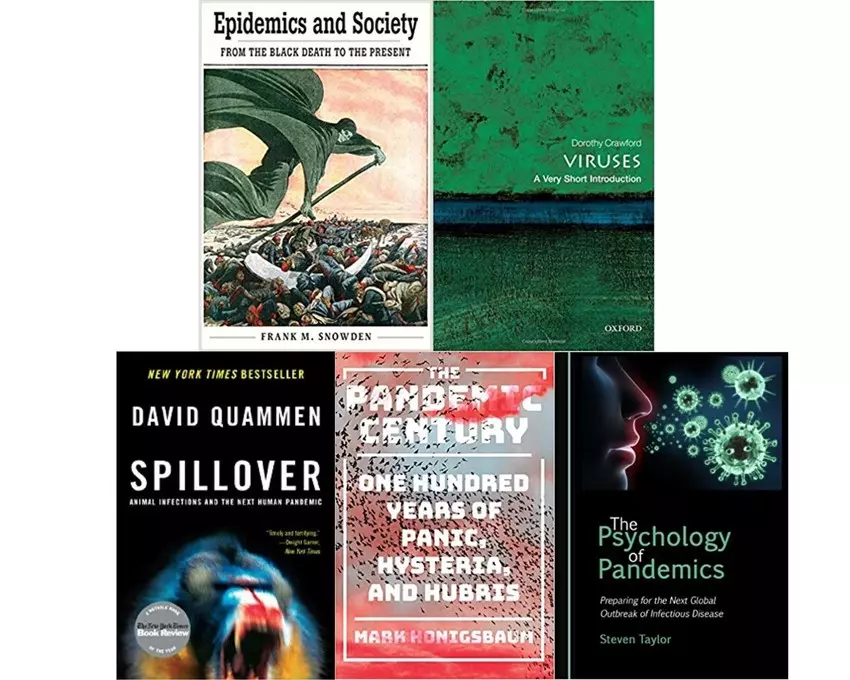
Here is where I learn to start. There are enormous books to read during pandemic . Again our individual choices matters. I agree. This is one of the five books to read during pandemic. To know about 5 books and what all the books says. I sincerely encourage you all to visit the source link further.
I personally chosen second book across five books which is VIRUSES A VERY SHORT INTRODUCTION. BY DOROTHY CRAWFORD. So, I’m genuinely admitting I need to know about the virus.
Let’s have a look and let’s know about the pandemic and the virus.

SOURCE: https://www.weforum.org/agenda/2020/03/coronavirus-books-pandemic-reading-covid19/
With respect.
The day was good. But still few of my results and performance are deteriorating. That’s okay. Still there is tomorrow. Let’s see how far I can improve. I need to comeback to the productive mode.
With respect.
I still didn’t controlled enough of my thoughts and actions. I still need to be conscious about what am I doing. I should not simply waste the time and day. That’s okay. Still I have a day called tomorrow. Use it or lose it.
With respect.
Too frustrated. It’s better to leave and let the things happen and face it and fight it. Still there is a hope. Still there are brighter days. Keep calm and carry on.
With respect.
I was too slow with my progress. That makes me fatigue and upset too. I should set a pace for every task.
With respect.
By Lydia Hallie.
Staying Motivated
Many people asked me how I was able to push myself to code so much on a normal day. It took me a while to find a good way to explain my thoughts behind it, but I think I finally found it!
Things to always keep in mind:
To read full article, I sincerely encourage you to visit further in the below source link.
SOURCE: https://www.freecodecamp.org/news/successfully-teaching-yourself-how-to-code-f6aac23db44a/
With respect.
· The first programmer in the world was a woman. Her name was Ada Lovelace and she worked on an analytical engine back in the 1,800’s.
· Just as we said before, recent studies have shown that over 70% of coding jobs are in fields outside of technology.
· The first computer virus was created in 1983.
· The first computer game was created in 1961.
· The word computer “bug” was inspired by a real bug. It was founded by Grace Hopper in 1947.
· Nowadays, there are over 700 different programming languages. All experts recommend for kids to start with a visual editor and a blockly based programming language for them to learn in a smoother and easier way.
· The first programming language (per sé) was called Fortran, and it was created in the ’50s.
· Almost any powered with electricity needs to be coded. Can you imagine?!
· Since many programming languages share the same structure, it is easy for students to learn a new programming language once they have already mastered one before.
· Computers run on binary code, which means that their software is written using only 1s and 0s.
· Learning coding has stunning cognitive-related benefits, such as problem-solving, computational thinking, analytical thinking, creative thinking, leadership-related skills, and even teamwork.
· In the near future knowing how to code will be as necessary as knowing how to write is today. Yes, regardless of the field or career your students decide for their future.
If you wanna read about the full article, click the source link in the down below.
SOURCE: https://gocoderz.com/blog/12-cool-facts-about-programming-and-coding-you-didnt-know/
With respect.
This list of top programming languages is based on the data sourced from the TIOBE Programming Community Index — a popular indicator of the popularity of programming languages.
TIOBE calculates the ratings by analyzing data from Google, Yahoo!, Bing, Wikipedia, Amazon, Baidu, and YouTube. Variables like the number of professional developers worldwide, training courses, and third-party vendors have also factored in this list.
Top 10 Most Popular Programming Languages In 2020:
The following list contains the top 20 programming languages and their performance in comparison to last year’s ratings. After that, the top 10 languages have been individually described in brief:

Another list says about the following categories:
If you read the Computer Science org, There are dozens of programming languages used in the industry today. We’ve compiled overviews of the 12 most important, relevant and in-demand of these languages below.
To read the full article, please click link down below.
SOURCES: : https://fossbytes.com/most-popular-programming-languages/
https://www.computerscience.org/resources/computer-programming-languages/
With respect.
Foremost, I would like to say how I get to about the ‘most respected and inspired personality Linus Torvalds’. More often I watch more about the IT related videos such as coding and documentary and IT innovators those who created massive impact across the globe. When I started watching the “The Code: Story of Linux Documentary (Multilingual)”. I personally feel I need to watch one more time far more deeper understanding.
It took me more time to think, share and write about this article. Today, I got a good track. Thank you almighty.
Why am I sharing and writing about this article?
One of the trait I see is the leadership skill. I notice and learn very well. Without leadership, a single human cannot do his/her own way. I personally argue, you should learn to take the leadership as a duty and responsibility to lead people in a better way. Also you must ready to step down as a leader for the upcoming generations too. If you are being a leader at a given point of time. Do well and collaborate. Show your interest towards your teammates. This is the far most important quality I started realizing. Leadership is not arrogantly holding momentum. This is what makes me to search leadership quality about the Linus Torvalds.
I sincerely encourage you all to watch the documentary and click the source link down below to read the full article.

About the writer:
Josh Fruhlinger is a writer and editor who lives in Los Angeles.
You don’t have to take a page out of his book to learn some valuable lessons from how Torvalds has managed the sprawling, self-selected, volunteer community of Linux developers—both the successes, and what led to his self-imposed exile.
Do: Be “trustworthy”.
Don’t: Forget that everyone is watching you.
Do: Fight passionately for things you think are important.
Don’t: Go nuclear on the small stuff.
Do: Recognize that emotions are part of the job.
Do: Be consistent.
Do: Recognize that you’re setting the tone.
Don’t: Assume everyone will get to act like you do.
Do: Admit when you might be wrong.
Do: Be graceful about it.
SOURCE: https://www.cio.com/article/3311799/leadership-lessons-from-linus-torvalds-7-dos-and-3-donts.html
With respect.
 Rationale writer