This is the one of the most important content I was searching to read. To build a Machine Learning model is vital, unless if you are passion about Machine Learning. I started thinking what is needed to write. The process, we had seen in the pictures.
Before looking at the abstract of this content, we should know the simpler meaning of the Machine Learning. “Machine learning is an application of artificial intelligence (AI) that provides systems the ability to automatically learn and improve from experience without being explicitly programmed. Machine learning focuses on the development of computer programs that can access data and use it learn for themselves”.
The article from towardsdatascience website, shows you the step by step to build the model. I’m gonna say every sub-headings of the step and rest of the diagrams and formulae, please check the links below.
The following steps covers;
Define adequately our problem (objective, desired outputs…).
Gather data.
Choose a measure of success.
Set an evaluation protocol and the different protocols available.
Prepare the data (dealing with missing values, with categorial values…).
Spilit correctly the data.
Differentiate between over and underfitting, defining what they are and explaining the best ways to avoid them.
An overview of how a model learns.
What is regularization and when is appropiate to use it.
Develop a benchmark model.
Choose an adequate model and tune it to get the best performance possible.
This is overall steps to build a Machine Learning model from the scratch. I’m gonna paste the source link down below. I sincerely encourage you all visit further.
It’s been a long time to post it. It took me a time to finish it off. Every time, this content fascinates me. Reading a book and sharing with someone is such a special feeling. Books are always gifted. To me, there is no compromise to ignore a book. Over a year, I do started recommending and sharing books to my colleagues and my blog (avid) readers too. Most probably, I was rigorous because “every book is worthy”. Whenever, I got books in any social media, the next moment I will take a screenshot and share. That’s it, without any hesitation. And if anybody recommends a book, I note it down with my notepad. I usually carry too.
That’s okay to say, thank you almighty. I got attached with the books in my undergraduate college days. Those sincere crazy readings, I still remember. Even more, my readings at that point is the stepping stone of my career. I just did “keep reading and keep reading”.
Here are my lists contains three books. I started to finish within a month. But It’s a challenge. Let’s see.
1. Environmental Studies by N. Arumugam and V. Kumaresan. When I was in my first year of undergraduate days, there is paper called Environmental studies in my first semester. It’s almost been eight years. I still preserved it. Even after eight years, when I decided to start reading and writing about climate change. This book shows me the way to start from fundamentals.
2. The Elements of Style by William Strunk. I started reading it over the last just two days. The reason, I decided to read this book is to write properly. Very small book, but I started jotting, probably it takes 2 more days to finish it off. This is one of the book that shows the ways to write properly. I’m still not okay with my writing. This is the right moment to read. If you are yet to start or already started writing, you must read it and try to apply.
3. A biographical book from the Indian perspective. Pundit Jawaharlal Nehru (Here, Pundit mean Teacher). The first Prime Minister of independent India from (1947-1964). It was an English book. Jawaharlal Nehru: Civilizing a Savage World by Nayantara Sahgal. But, I’m reading Tamil (It’s a language). நேரு உள்ளும் புறமும். In English, Nehru- Ullum Puramum by a Tamil author Jayanatarajan. The author translated into Tamil. Even more, I pay huge attention to read biographies and autobiographies from people (leaders) who left a legacy to the world.
If you people are interested to read this book. Go-Ahead. Please comment, what you people are reading right now.
The more you read the history, the more you will likely to know. Or even more, you could able to predict the future.
Categorically, If I’m writing, because I read substantially about the past.
To read any subject, you need to read about history on a particular subject. History teaches us a lot. Even more, I started watching History documentary too.
To me personally, when I started learning and delivering massive awareness about climate change, but I’m good and quite understood about what was happened regarding climate change over the last 5 years. Still I need to origin of climate that started deteriorating and I would like to some of the hard facts.
Here, I would like to submit the glimpse of data about History of climate change.
I should pin point the some of the historical moments and facts. An article from BBC news says, a brief history of climate change. In 1824 French physicist Joseph Fourier describes the Earth’s natural “greenhouse effect”. He writes: “The temperature [of the Earth] can be augmented by the interposition of the atmosphere, because heat in the state of light finds less resistance in penetrating the air, than in re-passing into the air when converted into non-luminous heat.”
And in 1896 – Swedish chemist Svante Arrhenius concludes that industrial-age coal burning will enhance the natural greenhouse effect. He suggests this might be beneficial for future generations. His conclusions on the likely size of the “man-made greenhouse” are in the same ballpark – a few degrees Celsius for a doubling of CO2 – as modern-day climate models.
In 1927 – Carbon emissions from fossil fuel burning and industry reach one billion tonnes per year.
In 1965- A US President’s Advisory Committee panel warns that the greenhouse effect is a matter of “real concern”.
In 1972 – First UN environment conference, in Stockholm. Climate change hardly registers on the agenda, which centres on issues such as chemical pollution, atomic bomb testing and whaling. The United Nations Environment Programme (Unep) is formed as a result.
In 1975 – US scientist Wallace Broecker puts the term “global warming” into the public domain in the title of a scientific paper.
In 1989 – Carbon emissions from fossil fuel burning and industry reach six billion tonnes per year.
In 1990 – IPCC produces First Assessment Report. It concludes that temperatures have risen by 0.3-0.6C over the last century, that humanity’s emissions are adding to the atmosphere’s natural complement of greenhouse gases, and that the addition would be expected to result in warming.
In 1992 – At the Earth Summit in Rio de Janeiro, governments agree the United Framework Convention on Climate Change. Its key objective is “stabilization of greenhouse gas concentrations in the atmosphere at a level that would prevent dangerous anthropogenic interference with the climate system”. Developed countries agree to return their emissions to 1990 levels.
In 2006 – The Stern Review concludes that climate change could damage global GDP by up to 20% if left unchecked – but curbing it would cost about 1% of global GDP.
In 2006 – Carbon emissions from fossil fuel burning and industry reach eight billion tonnes per year.
In 2007 – The IPCC’s Fourth Assessment Report concludes it is more than 90% likely that humanity’s emissions of greenhouse gases are responsible for modern-day climate change.
In 2007 – The IPCC and former US vice-president Al Gore receive the Nobel Peace Prize “for their efforts to build up and disseminate greater knowledge about man-made climate change, and to lay the foundations for the measures that are needed to counteract such change”.
In 2011 – Data shows concentrations of greenhouse gases are rising faster than in previous years.
In 2013 – The first part of the IPCC’s fifth assessment report says scientists are 95% certain that humans are the “dominant cause” of global warming since the 1950s.
Additionally, there is an article from time magazine says, since roughly 1850, atmospheric CO2, the dominant greenhouse gas, has grown at an explosive rate, close to what mathematicians call “exponential.” Human population, GDP and fossil fuel emissions accelerated simultaneously in a similar manner.
Chart: John Brooke. Data: Population—Angus Maddison and U.N.; GDP—Angus Maddison and World Bank; Emissions—Tom Boden and Bob Andres, Carbon Dioxide Information Analysis Center at Oak Ridge National Laboratory, and Gregg Marland, Research Institute for Environment, Energy and Economics; Atmospheric CO2—NOAA.
Industrial emissions have driven atmospheric CO2 levels from about 280 to 410. Human populations are now surging toward eight billion. A doubling of CO2 from preindustrial levels, which is projected by 2075 — due to the combination of industrial emissions and huge volumes of ancient greenhouse gases rising from melting permafrost – will put the earth at CO2 levels not seen for 35 million years, the last time that Antarctica was ice-free. A quadrupling of CO2 would put us into the extreme hothouse conditions of the Jurassic era.
History says, By the 1930s, at least one scientist would start to claim that carbon emissions might already be having a warming effect. British engineer Guy Stewart Callendar noted that the United States and North Atlantic region had warmed significantly on the heels of the Industrial Revolution.
Callendar’s calculations suggested that a doubling of CO2 in Earth’s atmosphere could warm Earth by 2 degrees C (3.6 degrees F). He would continue to argue into the 1960s that a greenhouse-effect warming of the planet was underway.
While Callendar’s claims were largely met with skepticism, he managed to draw attention to the possibility of global warming. That attention played a part in garnering some of the first government-funded projects to more closely monitor climate and CO2 levels.
1988: Global Warming Gets Real
The early 1980s would mark a sharp increase in global temperatures. Many experts point to 1988 as a critical turning point when watershed events placed global warming in the spotlight.
The summer of 1988 was the hottest on record (although many since then have been hotter). 1988 also saw widespread drought and wildfires within the United States.
Scientists sounding the alarm about climate change began to see media and the public paying closer attention. NASA scientist James Hansen delivered testimony and presented models to congress in June of 1988, saying he was “99 percent sure” that global warming was upon us.
The UN Climate Action Summit reinforced d that “1.5℃ is the socially, economically, politically and scientifically safe limit to global warming by the end of this century,” and set a deadline for achieving net zero emissions to 2050.
This is fair view of history that I took some of the important key points. I sincerely encourage you all to visit further from these three sources. To me, it’s hard to choose the moments and facts. I hope you all will go further. If you have any suggestions, please comment below.
Books shows you the way to read something new/something more.
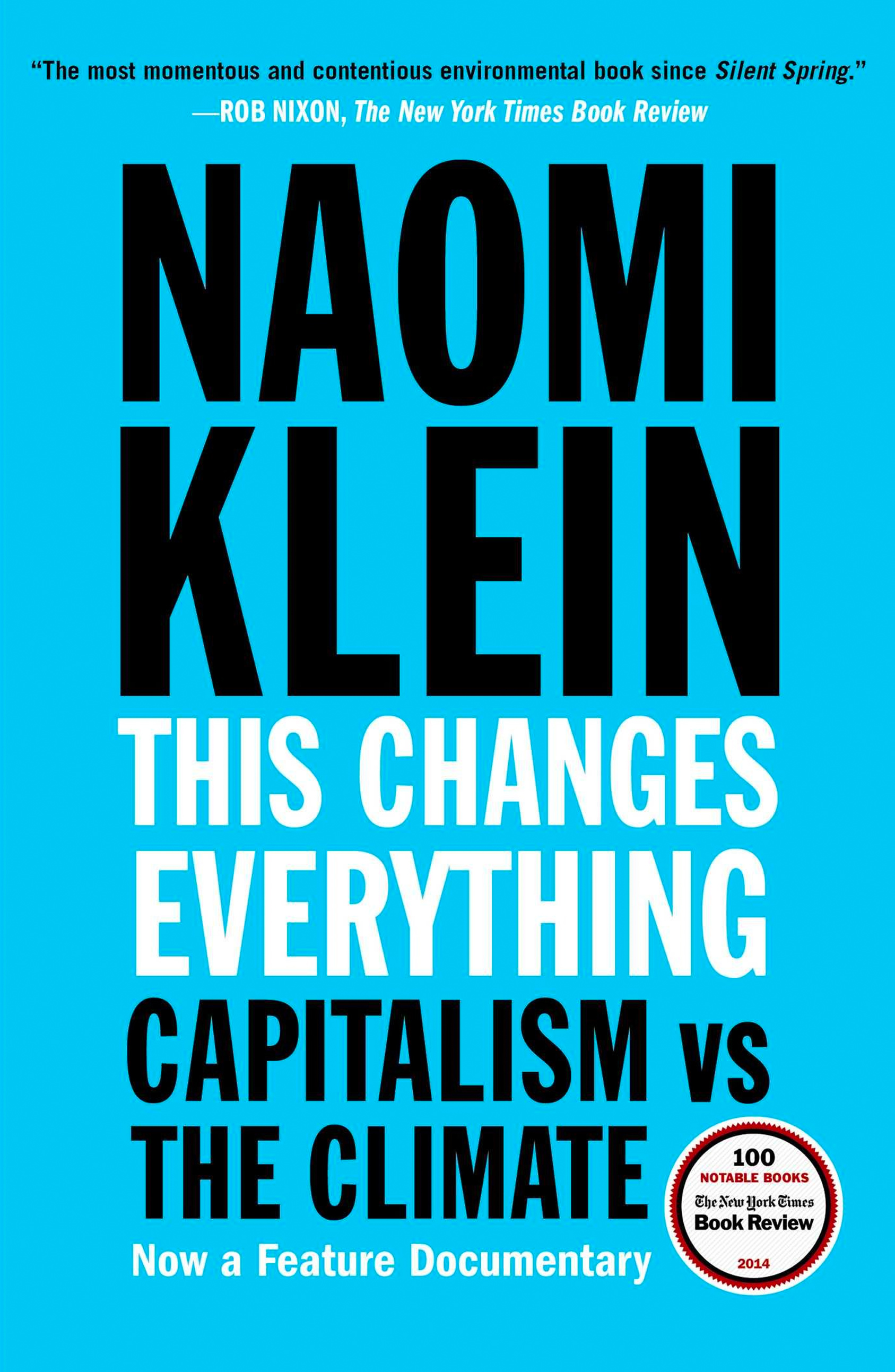
After going through several articles, news and inspirational personalities to know about climate change. It started taking lot of time to pick up a book to read. As I said in my earlier blog posts, I decided to start with Naomi Klein’s book This Changes Everything: Capitalism vs The Climate.
Because this is the first one I saw. Also, I would to like to continue to read other books with regard to climate change from the same author. Even more, I decided to pick few more to read. I just started researching, luckily, I got 21 books to read about climate change from The New York Times. Also, I just decided to pick the second book to read.
I personally encourage you all to read any of these 21 books or any other books too. This is also the right moment, we must know and spread the awareness about the climate change. I agree with you all, there are numerous problems still in outside. But this is the problem for entire planet, our “Mother earth”. Just a minute before, I arose few basic questions to my brother regarding climate, deforestation, humidity level of the planet and life span of the earth. He is very good at Chemistry and Geography. Even more, he is a well academician. The fact he delivered is, due to the emission of C0 which is one of the greenhouse gases, from vehicles and chemical industries affects ozone layer. This in turn raises the temperature of the earth and melting of glaciers which leads to rise of sea level. If you do think, our upcoming generations has to live. It is entirely our responsibility trying to save and earth.
We might have no idea, whether Artificial Intelligence (AI) or Robots gonna save/dominate our planet. From this moment, let’s start taking care our earth. It is all about individual initiative. We should be the volunteer.
If you would like to know the 21 books and other stuff. I sincerely encourage you all to visit source link further.
Last night, this was my audio book. This is my long waited book. Quite honestly, this is my first audiobook. After a while, I started knowing the value of thoughts. With a bit nervousness, I started writing notes. I just wrote very important lines that strikes my mind. Most probably, I must listen again. Feeling not enough.
I sincerely encourage you all to read this book.
Mind is the master viewer.
A man is literally what he thinks.
Act is the blossom of thought.
A man is made or unmade by thought.
Joy, goodwill and serenity.
A man should have the legitimate purpose.
To begin is to think with purpose.
The higher he lifts his thoughts, the higher he will be.
Articulately, this is one of the article, gives us the better start to understand about the climate change. As I said, to me this is also the most required and personally interested to talk and start about massive awareness.
I will paste the source links down below. I sincerely encourage you all to visit further.
About the writer:
Jonathan Woetzel
January 22, 2020 | Article
MGI Director and Senior Partner, Shanghai
Leads research on China, Asia, and global economic and business trends, helps cities and regions create sustainable growth, and supports the transformation of Chinese companies into global leaders
Based in China since 1985, Dr. Jonathan Woetzel has been instrumental in building McKinsey’s China office. In addition to his work helping Chinese and other Asian businesses prepare for global growth, Jonathan is a director of the McKinsey Global Institute (MGI), McKinsey’s business and economics research arm. He also leads McKinsey’s Cities Special Initiative and is responsible for convening McKinsey’s work with city, regional, and national authorities in more than 40 geographies around the world. He is a co-chair of the not-for-profit think tank, the Urban China Initiative—a joint venture of Tsinghua University and McKinsey—that aims to develop and implement solutions to China’s urbanization challenges.
Jonathan has led numerous research efforts on global economic trends, including growth and productivity, urbanization, affordable housing, energy and sustainability, e-commerce, and the economic impact of the Internet, as well as on productivity growth and economic development in China and Asia.
Jonathan’s public sector work is extensive. He has advised national governments in Asia on improving the environment for foreign investors, national energy policy, and economic development strategies. He also leads work with local government authorities, having conducted more than 60 projects throughout China to support local economic development and transformation. This includes working extensively in real estate—specifically, on commercial revitalization—and advising on energy investment strategies and energy productivity and transparency, among other issues.
Jonathan works in the private sector as well, most often on issues related to corporate strategy, operations, and organization. He has served clients in industries such as energy, metals and mining, health care, telecommunications, and transportation and supported the largest company in China in a fundamental restructuring that led to the then-largest foreign listing on the New York Stock Exchange.
Jonathan actively participates in a number of international forums and lectures at the Guanghua School of Business and the China-Europe International Business School, and is also an honorary lecturer at Jiaotong University’s Antai Business School.
Published widely in both Chinese and international publications, Jonathan has written five books on China, including Capitalist China: Strategies for a Revolutionized Economy (Wiley & Sons, 2003), Operation China: From Strategy to Execution (Harvard Business Press, 2007), and One Hour China (Towson Press, 2013). He has also coauthored, with Richard Dobbs and James Manyika, No Ordinary Disruption: The Four Global Forces Breaking All the Trends (PublicAffairs, May 2015).
A US citizen, Jonathan is proficient in German, Mandarin, and Spanish.
Education
University of Southern California PhD, political science
University of Southern California MA, political science
University of Southern California BA, humanities and liberal arts
Increasing effects of climate change call for better systematic risk management, more adaptation and accelerated decarbonization, writes Jonathan Woetzel in China Daily.
After more than 10,000 years of relative stability, the Earth’s climate is changing. As average temperatures rise, acute hazards, such as heat waves and floods grow in frequency and severity, and chronic hazards, such as drought and rising sea levels, intensify.
Climate change is already having substantial physical impact at a local level in regions across the world and the affected regions will continue to grow in number and size. Since the 1880s, the average global temperature has risen by about 1.1 C with significant regional variations. The 2017 floods in Hunan province affected 7.8 million people and resulted in a direct economic loss of $3.55 billion. Researchers estimate that climate change made the floods twice as likely.
The increasing level of physical climate risk expected in a high carbon emissions and low mitigation scenario is known as the representative carbon pathway 8.5 scenario. The likelihood of extreme precipitation events is expected to grow more than fourfold in some regions, including parts of China, Central Africa, and the east coast of North America compared with the period of 1950 to 1981. The likelihood of severe hurricane precipitation is expected to double in some parts of the southeastern United States and triple in some parts of Southeast Asia by 2040. Both are densely populated areas with large and globally connected economic activity. This could affect global supply chains, infrastructure and real estate around the world.
By 2050, the number of people living in areas with a non-zero chance of lethal heat waves would rise from zero today to between 700 million and 1.2 billion. (Both numbers do not factor in air conditioner penetration. Today, air conditioner penetration is roughly 10 percent across India and roughly 60 percent across China.) The increase is significant in part because the hottest and most humid parts of the world tend to be among the most heavily populated, and these areas are becoming even hotter and more humid.
The socioeconomic impacts of climate change will likely be nonlinear as system thresholds are breached and have knock-on effects. Most of the past increase in direct impact from hazards has come from greater exposure to hazards versus increases in their intensity. In the future, hazard intensification will likely assume a greater role. Societies and systems most at risk are close to physical and biological thresholds.
For example, as heat and humidity increase in India, by 2030 under the RCP 8.5 scenario, between 160 million and 200 million people could live in regions with an average 5 percent annual probability of experiencing a heat wave that exceeds the survivability threshold for a healthy human being, absent an adaptation response. Ocean warming could reduce fish catches, affecting the livelihoods of 650 million to 800 million people who rely on fishing revenue. In Ho Chi Minh City, a city prone to monsoonal and storm surge flooding, direct infrastructure damage from a 100-year flood could rise from about $200 million to $300 million today to $500 million to $1 billion by 2050, while knock-on costs could rise from $100 million to $400 million to between $1.5 billion and $8.5 billion.
Heavy rare earths, which are mined in southeastern China, offer an example of the potential impact of climate change on supply chains. The likelihood of extreme rainfall in the region sufficient to trigger mine and road closures is projected to rise from about 2.5 percent per year today to about 4 percent per year in 2030 and 6 percent in 2050. Given the commoditized nature of this supply chain, impacts on production could result in increased prices for all downstream players.
Financial markets could bring forward risk recognition in affected regions, with consequences for capital allocation and insurance. Greater understanding of physical climate risk could make long-duration borrowing unavailable, influence insurance cost and availability, and reduce the ultimate value of assets. This could trigger capital reallocation and asset repricing. In China, the 13th Five-Year Plan (2016-20) recognizes this risk and includes developing financial mechanisms through public-private-partnerships.
Countries and regions differ in their exposure to physical climate risk but none are immune and countries and regions with lower per capita GDP levels are generally more at risk. Poorer regions often have climates that are closer to physical thresholds. They rely more on outdoor work and natural capital and have less financial means to adapt quickly. But climate change could also benefit some countries. China is expected to be an agricultural net beneficiary from climate change over the near term, with increasing statistically expected yields and volatility skewed toward positive outcomes. China could see expected yields increase by about 2 percent by 2050 relative to 1998-2017. The annual probability of 10 percent breadbasket failure relative to a 1998-2017 baseline would decrease from 5 percent to 2 percent by 2050, while the annual probability of a bumper year with a 10 percent increase in yield would increase from 1 percent to approximately 12 percent by 2050.
On the other hand, we found a relatively high increase in the risk that some of China’s population would live in areas with the possibility of lethal annual heat waves. There’s a moderate increase in the risk of effective outdoor working hours annually affected by extreme heat and humidity in climate exposed-regions. We found a high increase in the annual share of capital stock at risk from riverine flood damage in climate-exposed regions and a high increase in the risk that the land surface would change climate classification.
Physical climate risk and its socioeconomic impacts will affect everyone, directly or indirectly. While stakeholders and decision-makers are trying to respond to climate changes, there are three steps that we think they could consider: Integrating climate risk into decision-making; accelerating the pace and scale of adaptation; and decarbonization at scale to prevent a further buildup of risks.
Decision-makers will need to translate climate science insights into potential physical and financial damages. Adaptation can help manage risks, even though this could prove costly for affected regions and entail hard choices. Preparations for adaptation – whether seawalls, cooling shelters, or drought-resistant crops – will need collective attention, particularly about where to invest versus retreat. While adaptation is now urgent and there are many adaptation opportunities, climate science tells us that further warming and risk increase can only be stopped by achieving zero net greenhouse gas emissions.
When it comes to read about a certain topic or even a report. I prefer and refer few of the known that comes to my knowledge till now. These are the reports, I hope people read, we can say as the most globally recognizable reports such as World Economic Forum, McKinsey Global Institute, International Monetary Fund, World Bank, World Health Organization and NASA. Categorically, still reports are there to read. I felt bad that I don’t know. I have a habit of looking forward to read further. I never settle with a single report or single view. More often, I go with several dimensions to refer.
I read the materials that comes to my ear/hand. I don’t compare any materials. I could visualize every material will gonna say something good or a lesson too.
This is one of the very good and readable article had given initiatives to the climate change.
Let’s have a look at it. I’m gonna paste the source link down below. Please refer further.
Climate change poses an urgent threat to economic progress, global food security, our natural systems, and individual livelihoods. Communities around the world are already experiencing increased climate impacts, from droughts to floods, rising seas to extreme weathers. The World Economic Forum’s Risk Report continuest to rank these environmental threats at the top of the list.
Public and private sector collaboration is essential to create a marketplace that will enable dramatic reductions in emissions and build resilience. The Forum’s Climate Initiatives provide a global platform to help raise ambition and accelerate climate action through multi-stakeholder partnerships.
The Climate Initiatives’ focus areas
The Forum’s Climate Initiatives are focused on three key areas of work to mitigate and adapt to climate change:
– Raising political ambition for key governments and business to have plans in place to reduce emissions and build climate resilience in alignment with scientific recommendations by COP26 in 2020.
– Accelerating transformational change across key value chains to ensure businesses play their role in tackling climate change.
– Creating effective governance and market mechanisms that incentivize investments to build a low carbon economy.
Global action on climate change must be taken to deliver enhanced national action plans and concrete solutions to reduce emissions and build resilience.
Climate change is not trendy topic. It is the devastating issue in the future. So in the present times, people like you and me has to take the necessary steps. Even more, every small steps matters most. Even though, we may or may not know what is going on?
What I’m gonna supposed to do?
I have to catch the concept and impact of the climate change by reading some of expert’s books and opinions.
The most respected and inspired people like Naomi Klein, Greta Thunberg. Their writings made an impact upon me.
The moment I started reading about climate change. I’m not able to understand. I kept reading few articles and started asking myself few very basic questions. When it comes to Naomi Klein, I watched a documentary in VPRO Documentary YouTube channel “Star economists”. Here, I noted Naomi Klein’s book “This Changes Everything: Capitalism vs The Climate. And not finally, still people are there for climate change. Also, Greta Thunberg, the most inspiring personality, a Swedish environmental activist who has gained international recognition for promoting the view that humanity is facing an existential crisis arising from climate change.
This article, I’m gonna share is the most recognizable information for all. When I started reading about climate change over six months, finally over the last 2 weeks, I decided to write my intentions about climate change. May be, I could not give my personal opinions and ideas about climate change. Categorically, I’m preparing to deliver.
Still people are coming forward to save the climate. Let’s take step by step.
Finally, my view is, let’s take our own duty and responsibility for climate change.
To learn about climate change, you first must know what climate is.
What Is Climate? How Is It Different From Weather? You might know what weather is. Weather is the changes we see and feel outside from day to day. It might rain one day and be sunny the next. Sometimes it is cold. Sometimes it is hot. Weather also changes from place to p
lace. People in one place might be wearing shorts and playing outside. At the same time, people far away might be shoveling snow.
Climate is the usual weather of a place. Climate can be different for different seasons. A place might be mostly warm and dry in the summer. The same place may be cool and wet in the winter. Different places can have different climates. You might live where it snows all the time. And some people live where it is always warm enough to swim outside!
There’s also Earth’s climate. Earth’s climate is what you get when you combine all the climates around the world together.
What Is Climate Change? Climate change is a change in the usual weather found in a place. This could be a change in how much rain a place usually gets in a year. Or it could be a change in a place’s usual temperature for a month or season.
Climate change is also a change in Earth’s climate. This could be a change in Earth’s usual temperature. Or it could be a change in where rain and snow usually fall on Earth.
Weather can change in just a few hours. Climate takes hundreds or even millions of years to change.
Is Earth’s Climate Changing? Earth’s climate is always changing. There have been times when Earth’s climate has been warmer than it is now. There have been times when it has been cooler. These times can last thousands or millions of years.
People who study Earth see that Earth’s climate is getting warmer. Earth’s temperature has gone up about one degree Fahrenheit in the last 100 years. This may not seem like much. But small changes in Earth’s temperature can have big effects.
Some effects are already happening. Warming of Earth’s climate has caused some snow and ice to melt. The warming also has caused oceans to rise. And it has changed the timing of when certain plants grow.
What Is Causing Earth’s Climate to Change? Many things can cause climate to change all on its own. Earth’s distance from the sun can change. The sun can send out more or less energy. Oceans can change. When a volcano erupts, it can change our climate.
Most scientists say that humans can change climate too. People drive cars. People heat and cool their houses. People cook food. All those things take energy. One way we get energy is by burning coal, oil and gas. Burning these things puts gases into the air. The gases cause the air to heat up. This can change the climate of a place. It also can change Earth’s climate.
What Might Happen to Earth’s Climate Scientists think that Earth’s temperature will keep going up for the next 100 years. This would cause more snow and ice to melt. Oceans would rise higher. Some places would get hotter. Other places might have colder winters with more snow. Some places might get more rain. Other places might get less rain. Some places might have stronger hurricanes.
How Does NASA Study Climate Change? Some NASA satellites look at Earth’s land, air, water and ice. Other tools look at the sun and the energy it sends out. Together, these are important for learning about Earth’s climate. Using all these tools can help scientists learn how climate might change.
What Can You Do to Help? Scientists think we can do things to stop the climate from changing as much. You can help by using less energy and water. Turn off lights and TVs when you leave a room. Turn off the water when brushing your teeth. You also can help by planting trees.
Another way to help is by learning about Earth. The more you know about Earth, the more you can help solve climate problems.
Do you know the difference between weather and climate? Credits: NASABurning coal, oil and gas to create energy releases gases. Credits: NASAMany NASA satellites study Earth and its climate. Credits: NASAThe left side of this picture is Petermann Glacier in Greenland. The picture was taken June 26, 2010. A huge iceberg broke off the glacier. The picture on the right was taken Aug. 13, 2010. Warmer water below the floating ice and at the sea’s surface were probably caused the break. Credits: NASA
Life is too hard not only for us, those who survived in the tough times. They just decided not to give up. They knew very well, there is no progress. But they started to keep moving a bit by bit. More often, they decided to a standstill.
They do self-talk with two questions:
I never go down fighting.
I never give up.
Giving up is such a comfortable option in life or profession. It is easy to give up. Once, you started learning not to give up. Once you started to fight back. There will be no second thought for giving up. It’s all about your instinct/mindset decides to fight back.
When things started plummeting, they console themselves and they say we are in the messy middle. So, we have to look at the vantage point (an optimistic view).
It is good to a standstill with holding dreams and desires. Rather than simply giving up. If you pause for a moment in the hard times. You can lean back and have a pep-talk with deeper questions.
What is my regret?
How can I bounce and in these hard times?
What are the pitfalls from my side?
What is my complete weakness?
Where are the possibilities to grow?
What’re the resources do I have?
To the extent, how can I survive?
These are relevant questions for not to give up.
It is better to wait for success, rather than quitting in the present.
It’s better to a standstill, rather than losing hope.
It’s better to look into the possibility of progress, rather than holding regrets.
The first step is to equip the students from school itself. Here, I’m not contradicting or making a controversial statement with college students or if a fresher joined in organizations or any experienced peoples.
I will motivate and convey values to anyone. Categorically, age is just a number. Any human can learn skills at any age. You can learn/acquire any skills until your last breath.
The point is, to me as an upcoming professor, it would be better if children can learn possibly within the school. So, this is one of the 9 In-demand skills that are highly required to engage.
All these nine skills are absolutely required. But the first one must. Money management is the most important skill. They must know how to save and spend. Even more, how to invest and diversify too. Rather than just the motto of earning money/making passive income/even building fortunate too.
I personally gonna be the volunteer to teach school students with these 9 In-demand skills. I had seen a few similar posts in Instagram too. Although, my thinking started getting a clear picture and rises questions within myself too.
Why school students aren’t getting many possibilities in these kinds of skills?
What will be the impact?
If these skills are learned. I promise and believe, their career gonna be massive.
This impactful pic got it from Twitter. I’m gonna share the source link down below. Please visit further.


 Rationale writer